

ACHAA Virtual Cultural Centre
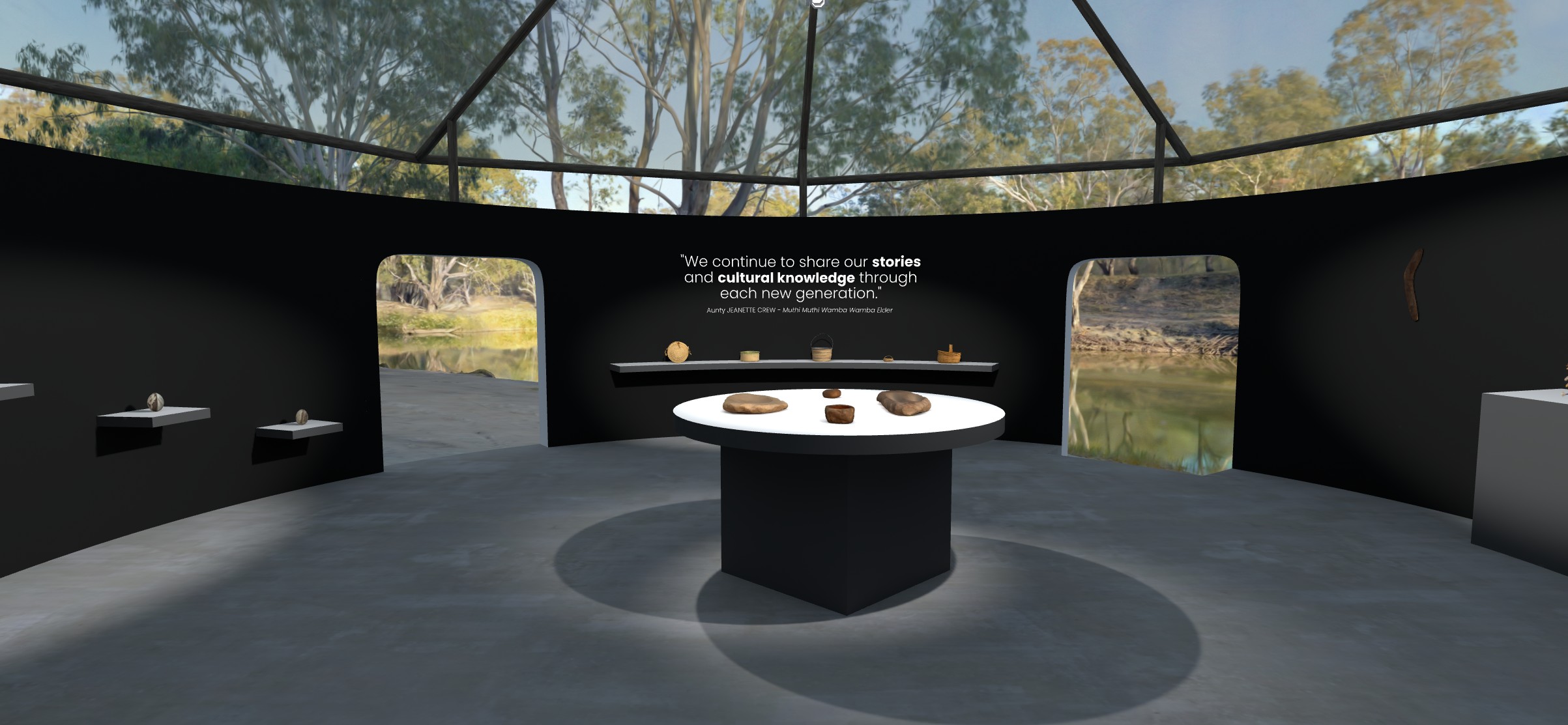
A virtual cultural centre for Aboriginal NSW, built with four community-controlled cultural centres whose collections stay on Country.
Visit the Virtual Cultural Centre
The Aboriginal Culture, Heritage & Arts Association (ACHAA) is the peak body for 24 Aboriginal community-controlled cultural centres and keeping places across NSW. We worked with ACHAA and four of its member centres to build a virtual cultural centre: one place online to explore their collections, while the material itself stays on Country with its custodians. Unlike a single state-run building, it reaches people where they live and learn, in schools, at home and on their phones, laptops and tablets.
The four centres are Yarrawarra Aboriginal Cultural Centre on Gumbaynggirr Country, Armidale Aboriginal Cultural Centre and Keeping Place on Anaiwan Country, Wungunja Cultural Centre on Wongaibon Country and Yarkuwa Indigenous Knowledge Centre on Wamba Wamba and Perapa Perapa Country. Each centre chose and curated its own objects, artworks and landscapes, so the collections show what is distinct about each place, from saltwater and freshwater Country to fishing, hunting and gathering tools. Every question about text and images was discussed and agreed, and each centre had the final say over its own material.
Visitors can explore the collections in four ways: an in-browser 3D viewer powered by Pedestal 3D® with extended information on each item; the Rotunda, a gallery set on Country; fully walkable On Country landscapes; and VR, where you can pick up an object in the Rotunda and then find it on Country. The site is web first, running in any browser with nothing to install, and the VR extends the platform behind our MAPDA award-winning ARTEXPRESS Virtual.
We digitised the objects with high-end photogrammetry and physically based (PBR) materials, using light fields where appropriate, and captured the landscapes with volumetric imaging (Gaussian splatting) so they become open, walkable spaces rather than stitched still images. The brief allowed for four objects and four artworks per centre, 32 items in all. Working closely with the centres, we found efficiencies, added landscapes and delivered 83 items for the same budget.
Deciding what belongs online was the heart of the project. Material that is fine to show locally can mean something different once other communities can see it online, so several items were withdrawn along the way: after photography, during production and after the soft launch. Each removal was the process working, not a setback. The project was funded by a Create NSW connectivity grant, and feedback on the site is welcome from all communities.